Non Destructive Testing
Non Destructive Testing
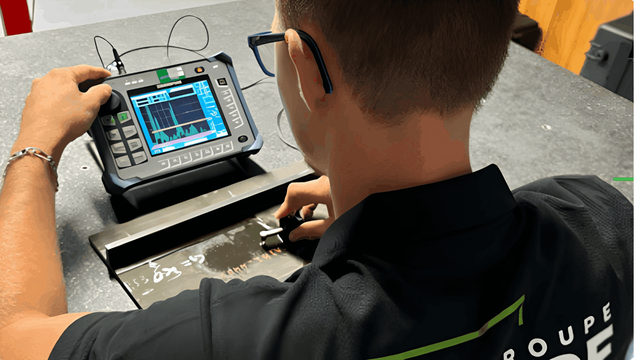
Product control and inspection
- Quality control or production control: Control on serial parts and production control,
- Product control after delivery: investigation / inspection, MRO, AOG
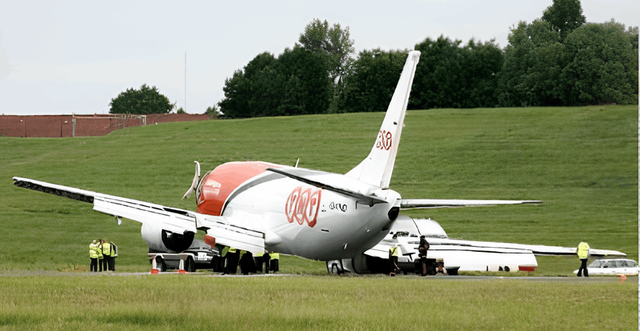
Aircraft On Ground
- Inspections required by approved maintenance documents (AMM, SRM, NDT Manual, Service Bulletin, AD, etc.);
- Inspections following the discovery of damage, an impact, corrosion, a crack, or a structural anomaly;
- Inspections required after structural repairs or modifications;
- Inspections to confirm the absence of defects prior to issuing the Aircraft Release to Service (CRS).
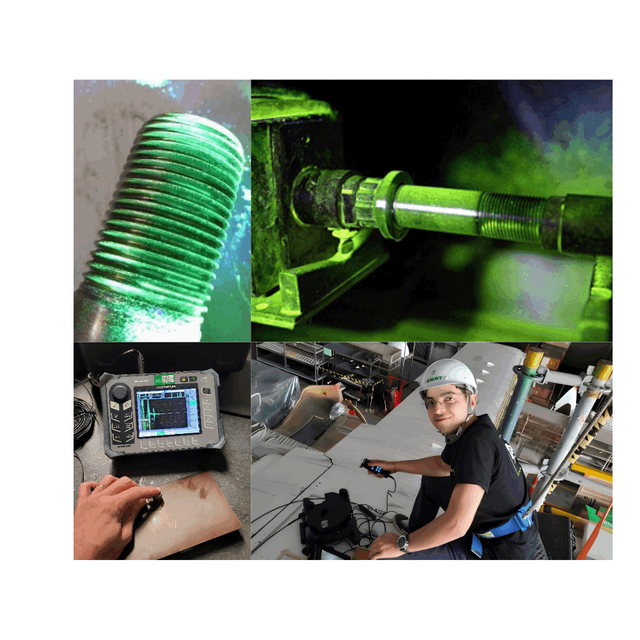
Non-Destructive Testing Methods
Eddy Current Testing (ET)
- Detection of defects or material changes based on the induction of electrical currents in a conductive material, enabling the detection of local variations.
Penetrant Testing (PT)
- Detection of surface-breaking defects through the capillary penetration of a liquid indicator.
Magnetic Particle Testing (MT)
- Detection of surface and near-surface defects in ferromagnetic materials by identifying magnetic flux leaks using magnetic particles.
Ultrasonic Testing (UT)
- Detection and localization of internal defects by analyzing reflected echoes, based on the propagation of ultrasonic waves through the material.
Visual Testing (VT) / Endoscopy
- Visual inspection of inaccessible areas without disassembly, using borescopes or videoscopes equipped with lighting and image capture systems.
Thermography (IRT)
- Identification of defects or malfunctions based on the measurement of surface temperature variations using an infrared camera.
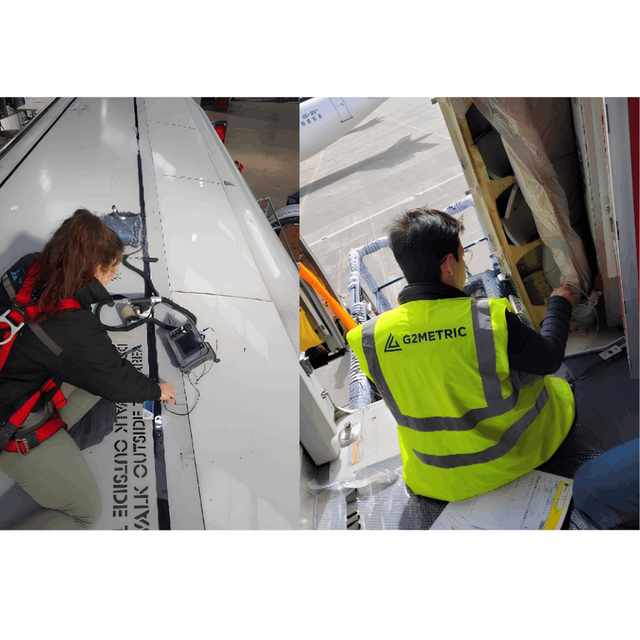
Part 145
All of our operations are conducted in strict compliance with Part-145 regulations, applicable standards, and quality procedures.
Our expertise enables us to support operators, maintenance facilities, and aircraft owners by ensuring that inspections are reliable, traceable, and compliant with the highest standards of aviation safety.
Certifications
- Certifiés IAW EN4179 (EU) & NAS 410 (US) ;
- Niveau II : UT (Ultrasons), ET (Courants de Foucault), MT (Magnétique), PT (Ressuage) ;
- Niveau III : ET (Courants de Foucault) ;
- Formation Part145 (Ewis, CDCCL, Facteur Humain, Part145).
Tous nos contrats de service incluent une assistance téléphonique gratuite et une réponse rapide.

Audit et Formation de Niveau 3
- Aspect Règlementaire du CND ;
- Qualité et Formation des Equipes de CND ;
- Gestion des procédures internes de l’entreprise ;
- Gestion des formations du personnel ;
- Gestion des Compétences CND.
Contact Us